


ProPartS
Developing strategies for the protection of taxa consisting of interconnected sexual and parthenogenetic reproducing strains
The general topic
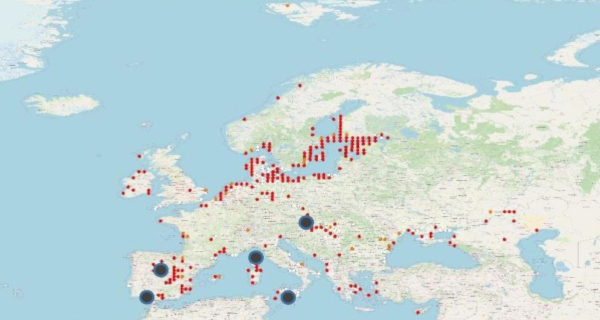
The loss of genetic diversity is considered a key element in entering the extinction vortex. Shrinking population size reduces the number of genetic variants available to cope with changes in habitat conditions. Together with other factors such as genetic drift, this loss progressively decreases the fitness of any given species. This is especially true for asexually reproducing species, where recombination of traits is limited to the genetic variability of a single parent. The conservation of genetic diversity is thus a central element of conservation concepts. In species where asexual and sexual populations occur, it is important to assess genetic diversity and genetic structure to identify priority conservation areas.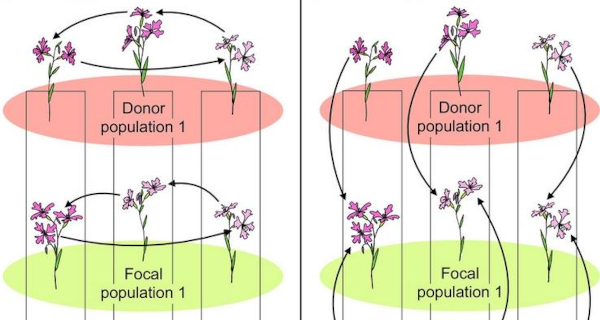

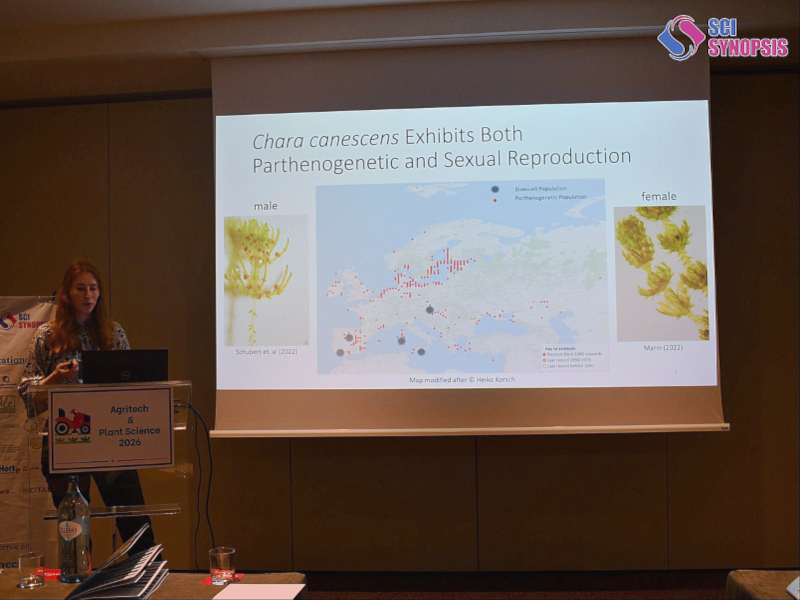
2nd international conference on plant sciences, Lisbon, Portugal
Johanna Weitzel (German project partner) presented the first results of the ProPartS analyses on fungal and bacterial interactions with Chara canescens rhizoids. The presentation was followed by discussions with international experts in the field.

Watch the new ProPartS informative videos
The University of Valencia has produced a series of informative videos for the ProPartS project. These videos explore key aspects of the project, including the tools, technologies, and applications of proactive conservation initiatives for Chara canescens. Watch the full videos to learn more about the ProPartS initiative!
Watch the new videos in the "Video Abstracts" section on the homepage.
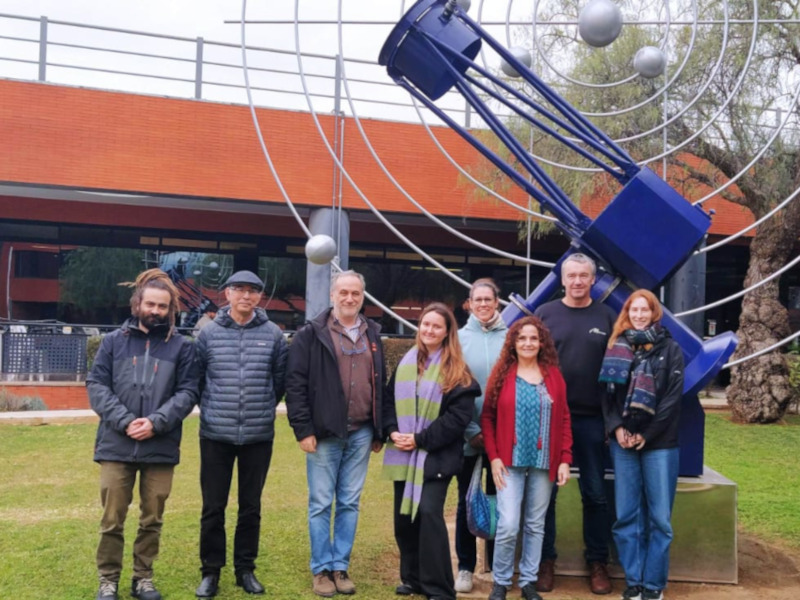
Fifth ProParts Meeting - Valencia, Spain
On 15-16 January 2026, the ProPartS partners met in Valencia, Spain. The status of the project was reviewed, as usual considering the work already done and the next steps. We are now in the last year of activity, and we are preparing to collect and disseminate the results.
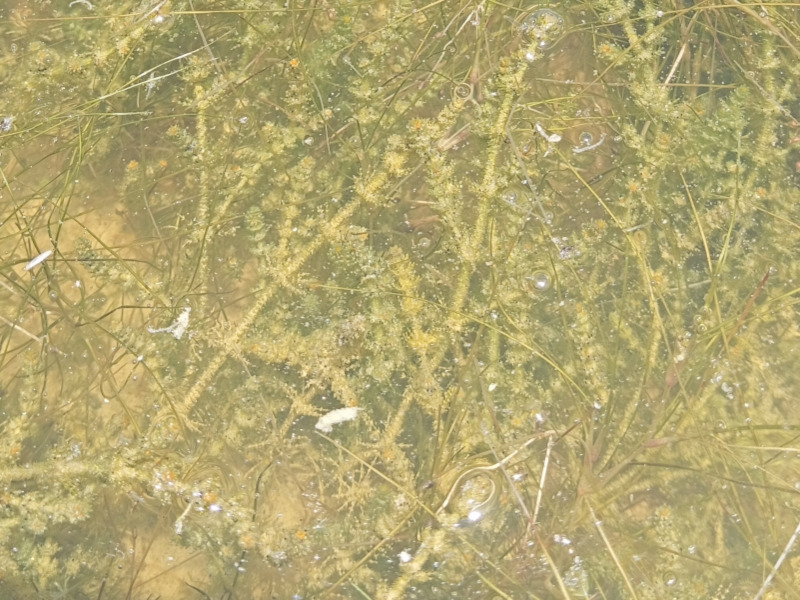
Chara canescens back to the Pergusa Lake
After that the Lake of Pergusa had almost disappeared in the summer of 2024 due to drought combined with other anthropogenic factors, it has finally returned to more normal levels, with an extensive meadow of Chara canescens and Ruppia maritima. Unfortunately, the Chara population appears to be unisexual, with all females and no males, losing the characteristic that made it special worldwide.
Project Funding





This research was funded by Biodiversa+, the European Biodiversity Partnership under the 2021-2022. BiodivProtect joint call for research proposals, co-funded by the European Commission (GA N°101052342) and with the funding organisations Deutsche Forschungsgemeinschaft e.V. (Germany), Agencia Estatal de Investigación, Fundación Biodiversidad (Spain), Ministry of Universities and Research (Italy), Österreichischer Wissenschaftsfonds FWF (Austria).